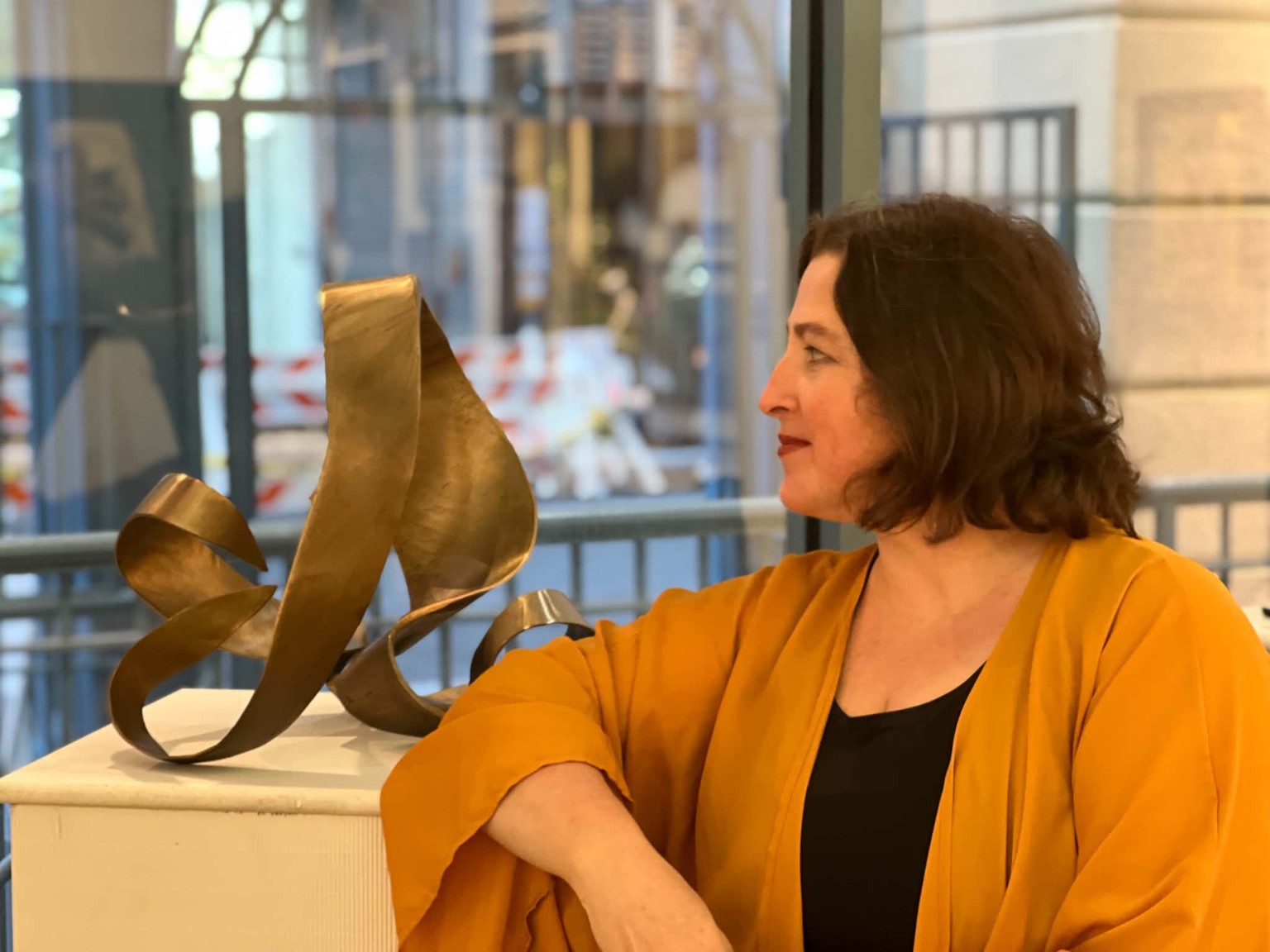
What happens when a line refuses to remain on paper? For Natalia Koren, that question has become a lifelong artistic investigation.
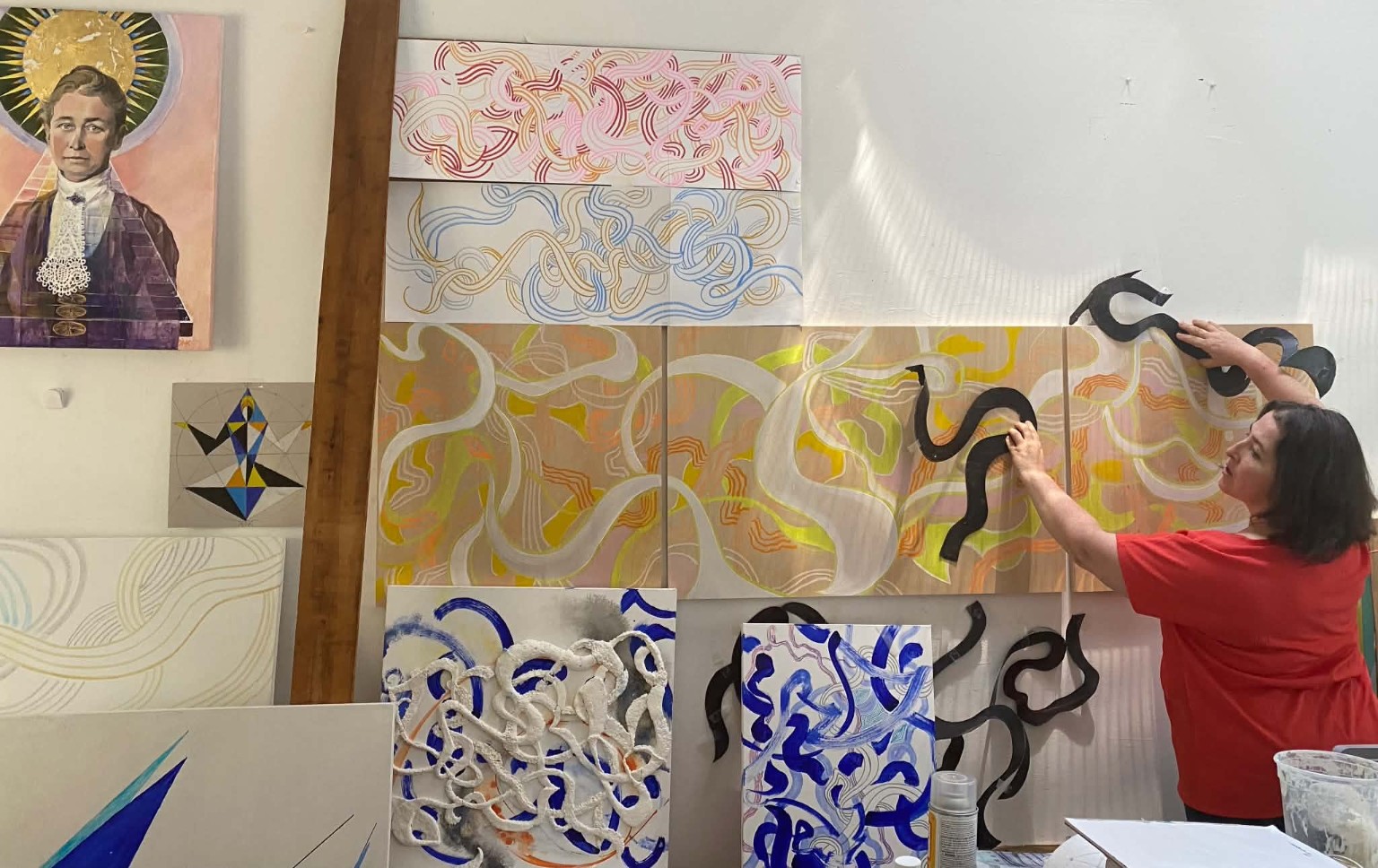
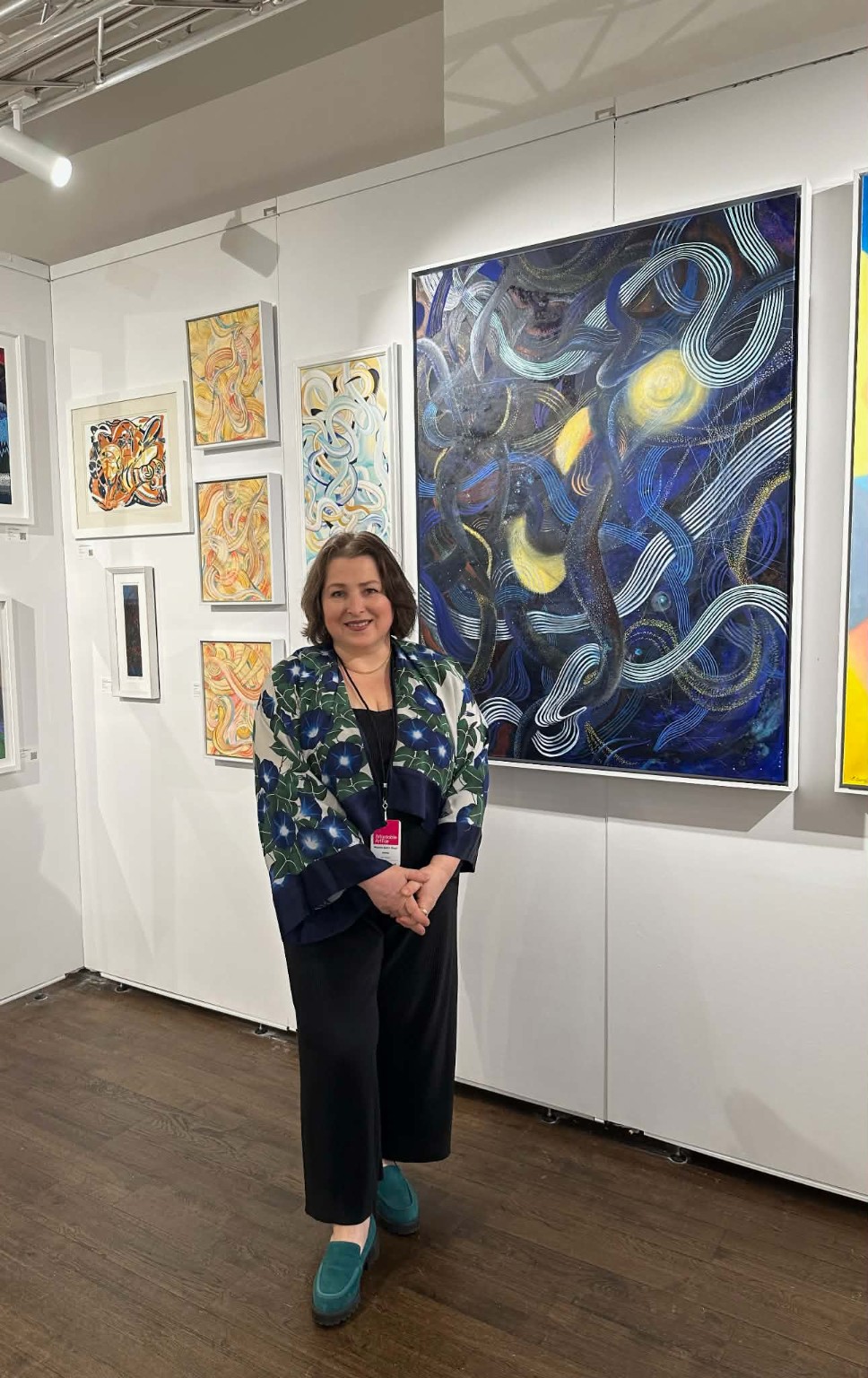
Beginning with drawing and expanding into painting, sculpture and spatial experimentation, Koren has developed a visual language that moves between image and structure, movement and form, city and memory. Born and educated in Saint Petersburg and later transformed by decades of life and work in New York, she belongs to a generation of artists whose work crosses conventional boundaries between disciplines.
Her sculptures often appear architectural. Her drawings behave like spatial diagrams. Her paintings resemble maps of invisible energy. Architecture, in this reading, begins long before walls, roofs and façades: it begins with the ability to see space.
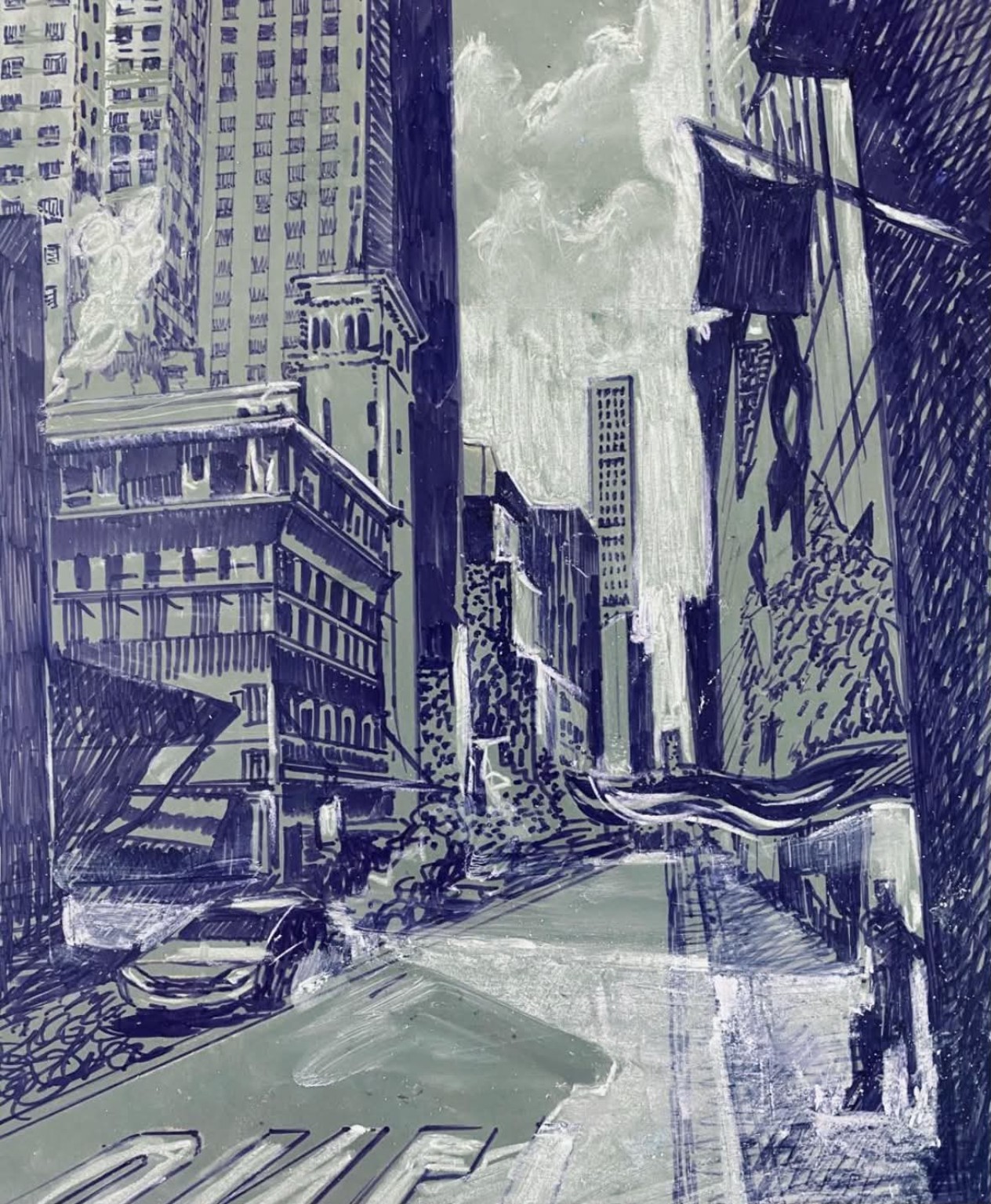
Major New York exhibition • Fall 2026
The forthcoming exhibition brings together drawing, painting, sculpture and spatial investigations developed across Koren’s career, with recurring themes of movement, urban rhythm, memory and the architecture of form.
The Third Eye
ARCHCABINET.ONLINE: Where did your artistic biography begin — with your family, with Petersburg, with the Secondary Art School, with museums, with a particular teacher, or with inner stubbornness?
Natalia Koren: From the very beginning, as far back as I can remember, I was drawing faces with three eyes in my mother’s notebooks. It was precisely that third eye that suggested to my family that the matter was serious and that the child needed to be supplied with drawing albums.
My uncle, Oleg Petrovich Koren, known to more than one generation of students at the Secondary Art School, was teaching drawing there. He was strict and fair. With me he was even stricter and allowed no indulgence. I think this is what cultivated in me the inner artistic strength. And all of this was happening among the museums and the streets of Saint Petersburg.
A School Where Everyone Was a Universe
ARCHCABINET.ONLINE: How did you get into the Secondary Art School, and what do you remember about it not as a legend, but as real life?
Natalia Koren: One day my uncle said to me: “Well, it is time for you to go to the Secondary Art School.” I entered the fifth grade exams on the same terms as everyone else. Oleg Petrovich left the admissions committee so that no one would think anything improper, so that everything would be honest.
From the moment I entered the school, my life changed completely. It was extraordinary to be surrounded by talented peers — I had never encountered such an environment before. Every person was a universe, and everyone was so unique. Long communication with interesting people gave me creative aspiration, the right to be myself, and the desire to keep growing.
All this took place against a background of plaster casts, studio rounds, laughter, poetry, rock music, samizdat, literature essays, and, for some unclear reason, physics and algebra lessons squeezed into all of it.
What did the school give you that later proved useful in America, and what did you have to free yourself from?
Natalia Koren: The school gave me everything. Just as the seed contains the beginnings of an entire tree, different aspects born in those school years have sprouted and continue to sprout.
Petersburg as a Workshop of Vision
In your childhood, was Petersburg a city of museums, or a city of streets, courtyards, staircases, water, windows and light?
Natalia Koren: A city of mysterious streets, enigmatic staircases and mystical courtyards with the warm light of windows in the twilight gloom. In museums, I felt pretty much at home.
How did Petersburg influence your sense of composition, scale and space?
Natalia Koren: There was so much open sky. A boundless color background in iridescent combinations. And underneath it — all of our everyday life.
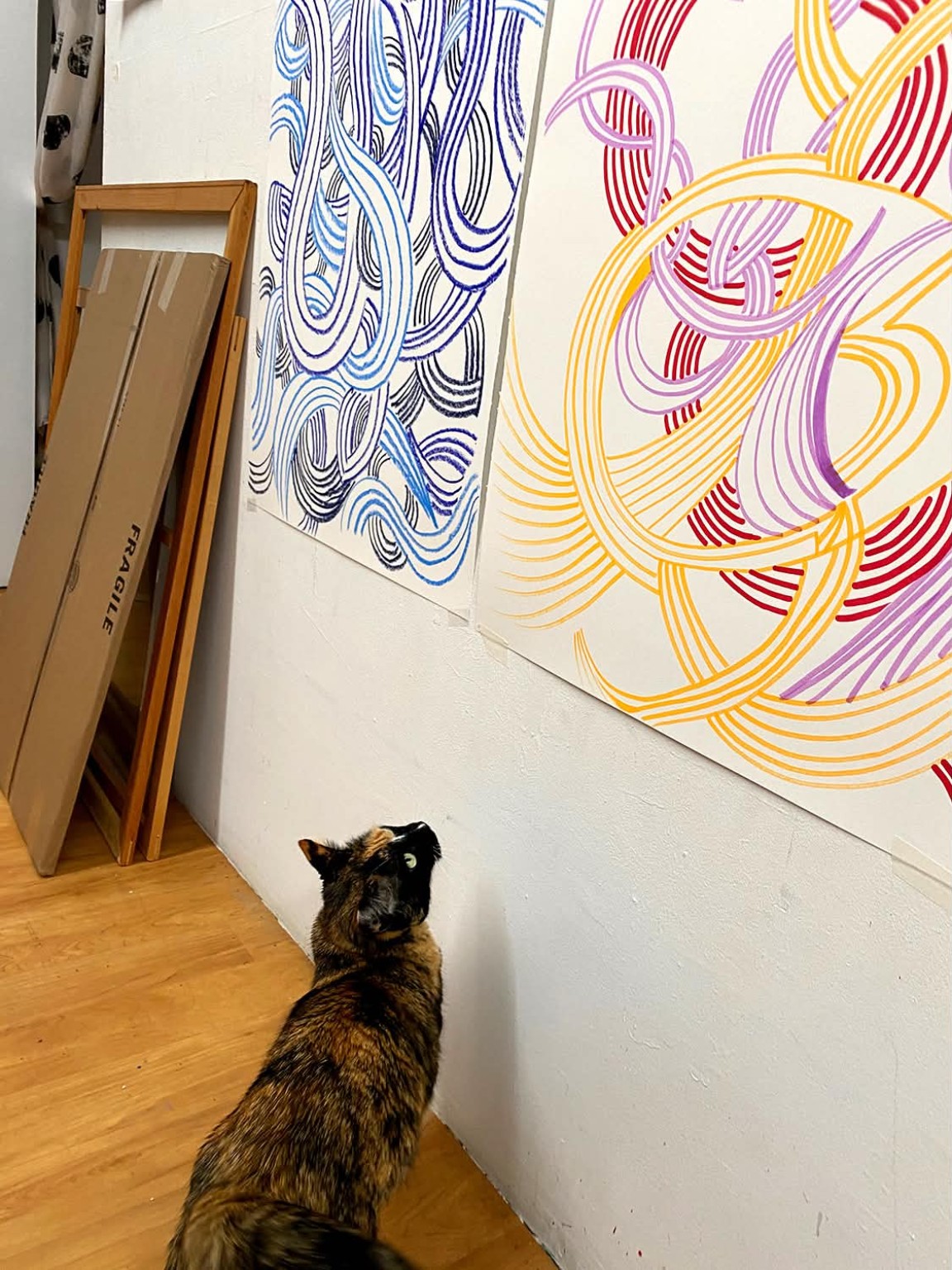
In Koren’s work, Saint Petersburg and New York meet as two different systems of space: horizontal depth and vertical speed. One city gives sky, courtyards and inner perspective; the other gives compression, verticality and motion.
When Malevich Became a Contemporary
When you were studying, was the Russian avant-garde — Malevich, Filonov, Tatlin, Rodchenko, Lissitzky, Matyushin — a living subject for you, or rather museum history?
Natalia Koren: All of them were a discovery, because at school we were not taught about them. Only at the end of the 1980s there was an epoch-making exhibition, The Russian Avant-garde, at the Russian Museum. Fortunately, at that very moment I was looking for a new inspiration after a long romance with Renaissance art and a brief flirtation with Impressionism.
That exhibition largely determined my future: the search for myself in form, color, concept and worldview. A complete pluralism in art. That is how I moved from academic unanimity to multidimensional perception and direct expression. There was another groundbreaking encounter with the painting of Jackson Pollock at MoMA in New York. These two museum exhibitions became for me a living history of self-discovery.
Which figure of the Russian avant-garde feels closest to you today, and why?
Natalia Koren: Today it is Malevich. Long ago it was Filonov; later, Tatlin, Lissitzky and Rodchenko.
Suprematism is not just one of the “isms”. It is a spiritual standard of the unknown and initially incomprehensible — of what surrounds us and of which we are a part. Filonov presents the world in its atomic multiplicity, from micro to macro, through the prism of the observer and witness. Tatlin, Lissitzky and Rodchenko represent the energy directed forward and upward, like a rocket cutting through the boundless field of the space-time continuum.
A Key, Two Cassettes, and an Unknown Future
Was moving to America a long-awaited event for you, or a rupture?
Natalia Koren: A rupture. It was my parents’ decision. Back then I believed in my own authority, with the arrogance of youth that challenges the wisdom of generations.
But after thinking it over, I decided to go along with them, as if for summer plein-air painting. So I arrived with a portable easel and a small bag containing the key to Saint Petersburg doors and two cassette tapes: Pink Floyd’s The Dark Side of the Moon and Aquarium’s Taboo.
What was the hardest thing in the first years?
Natalia Koren: The urgent need to find myself adapting to the new reality with everything that follows.
New York: The First Blow Was Joy
After Petersburg, New York is almost another law of physics: verticality, speed, noise, density, money, crowds, subway, shop windows, lofts. What struck you first?
Natalia Koren: The first impression was delight and love from first sight. It was the capital of the world, where, in a sharply contrasting harmony there coexisted incredible verticals, dizzying speed, deafening noise, density so intense that in the Big Apple there was no room for an apple to fall! The opulence and poverty, and constantly shifting multicultural crowds of people of all walks of life.
New York appears in Koren’s work not merely as a subject, but as an organizing force: verticality, density and motion become a mechanism of perception.
When the Line Leaves the Page
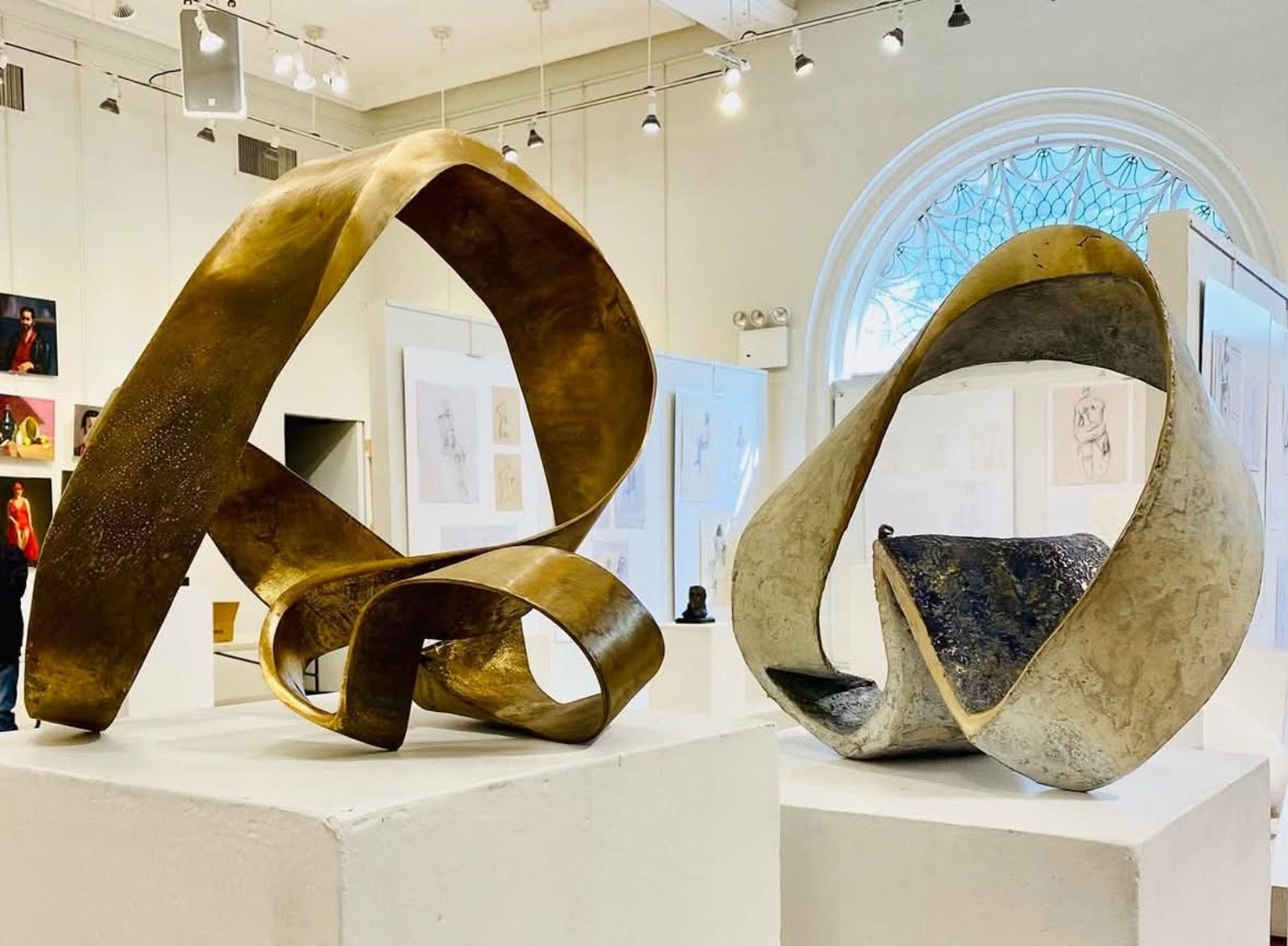
At a certain moment, the line stops being satisfied with the surface. It wants more air, more resistance, more risk. This is where Koren’s sculpture begins.
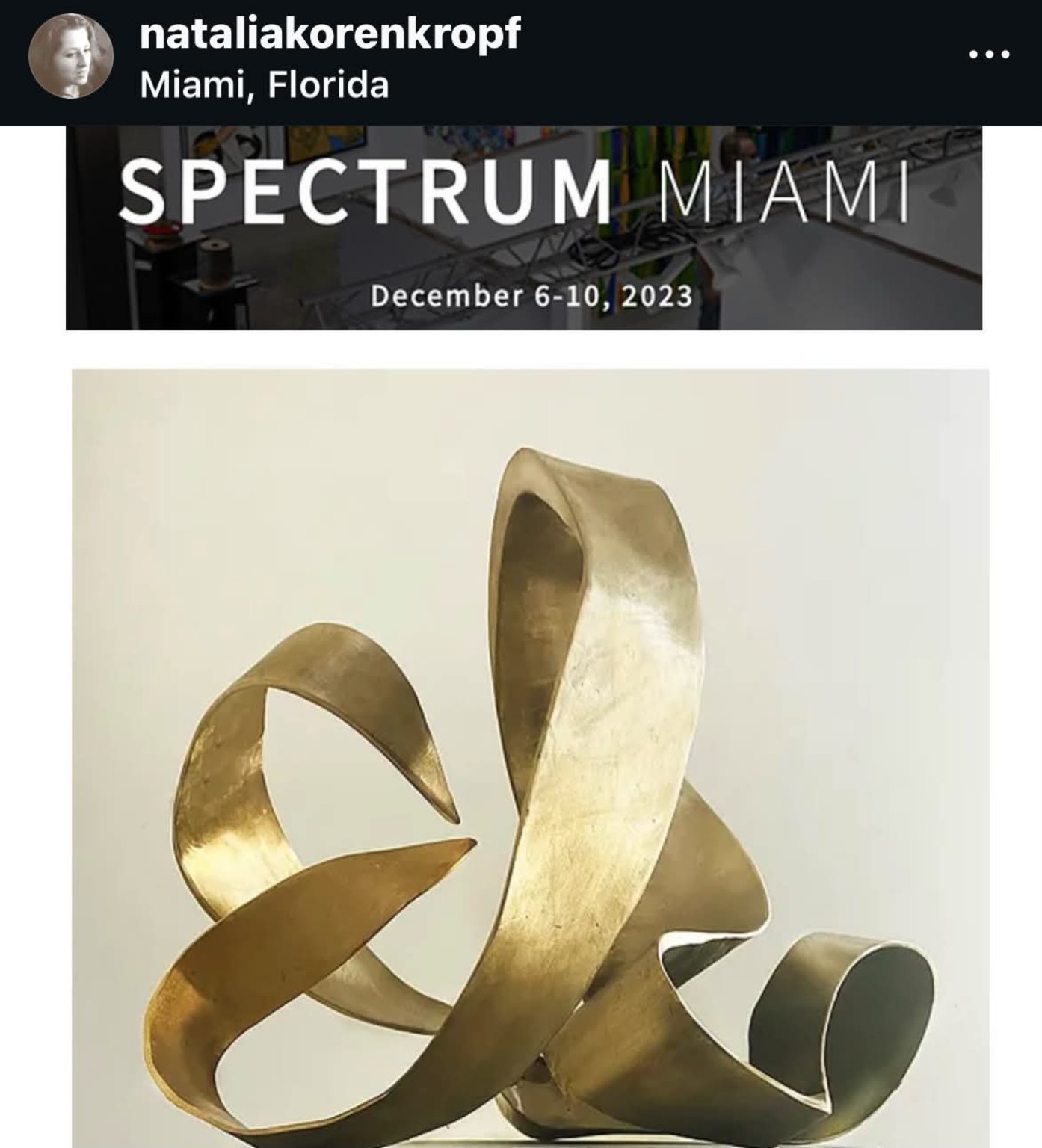
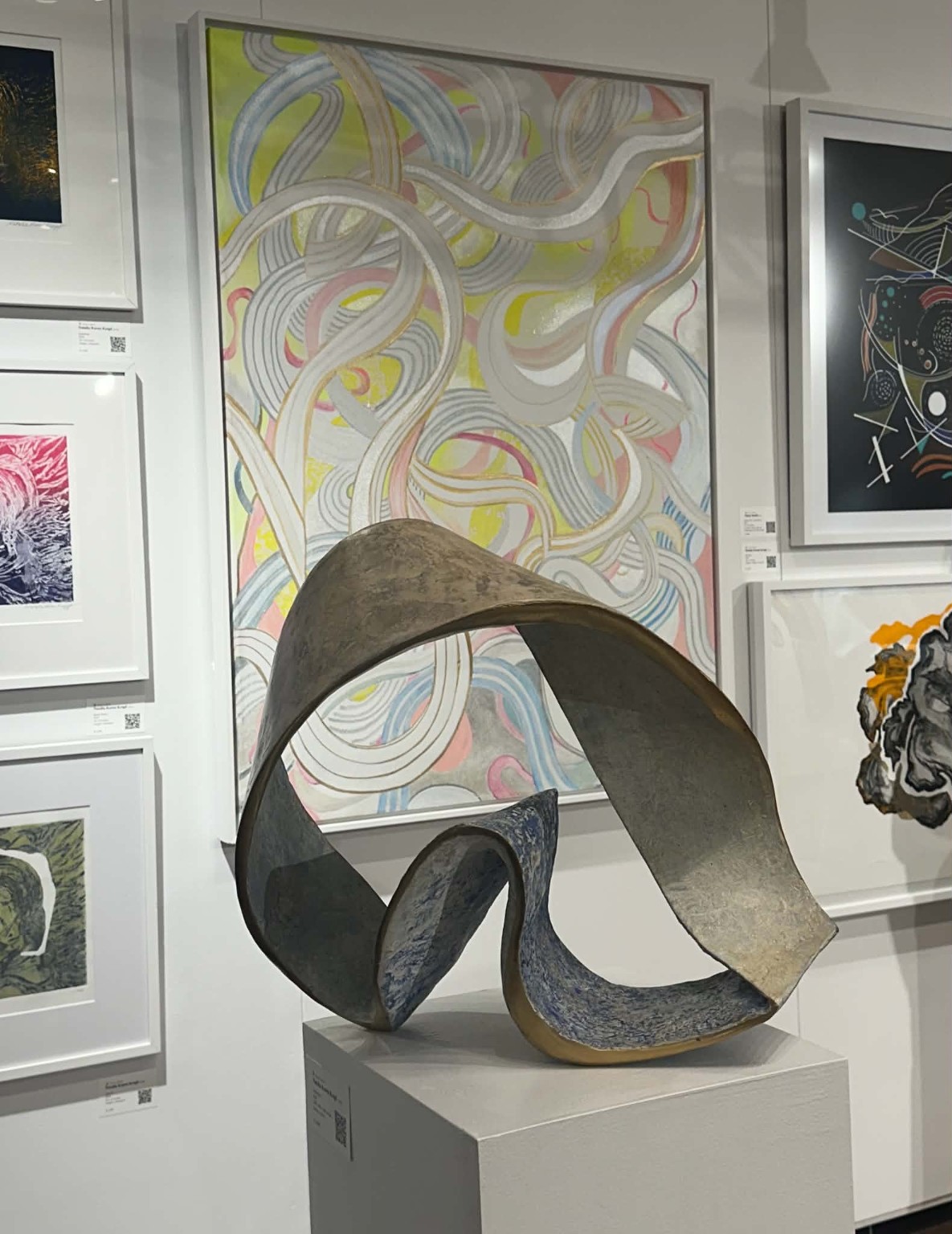
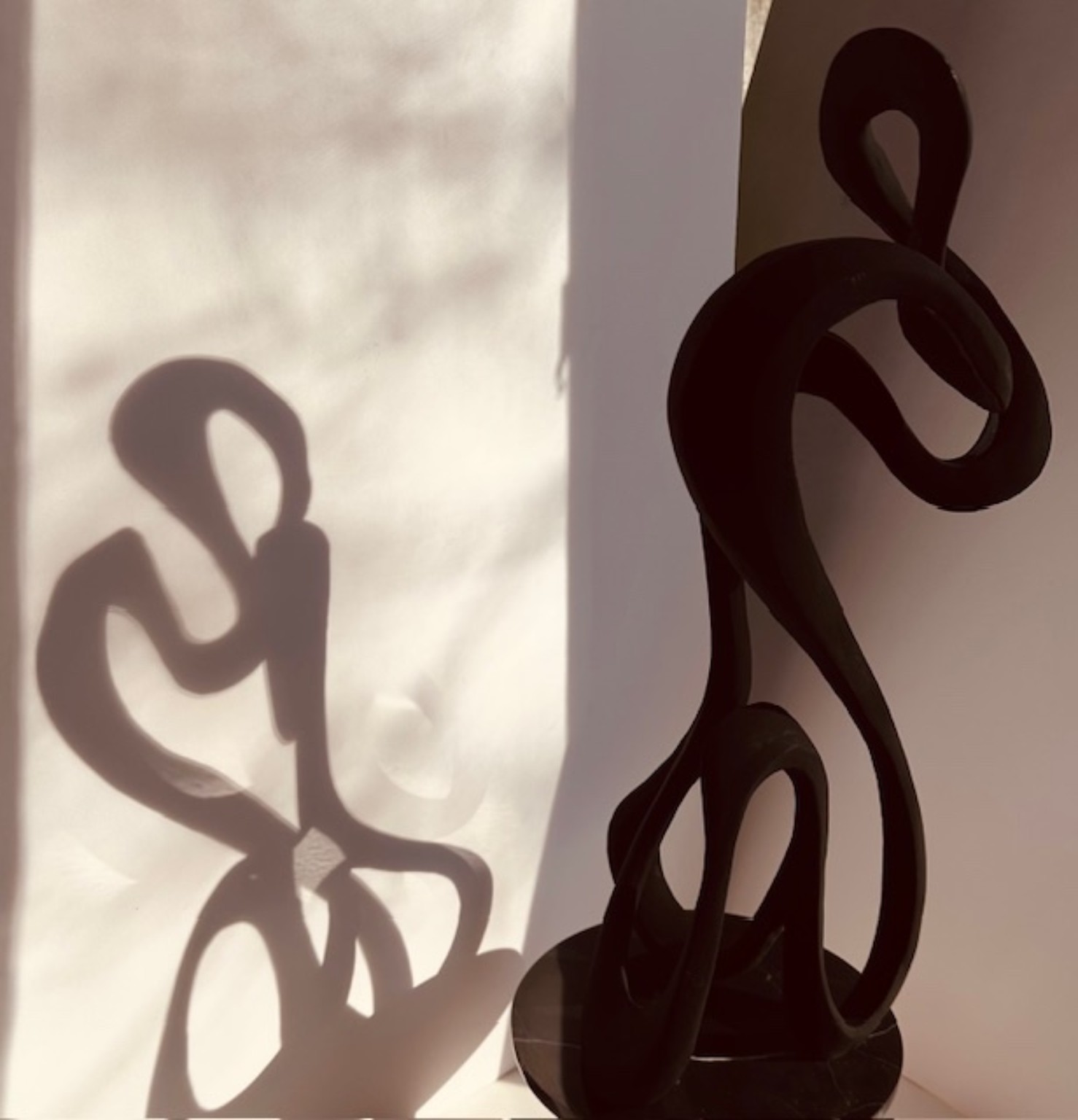
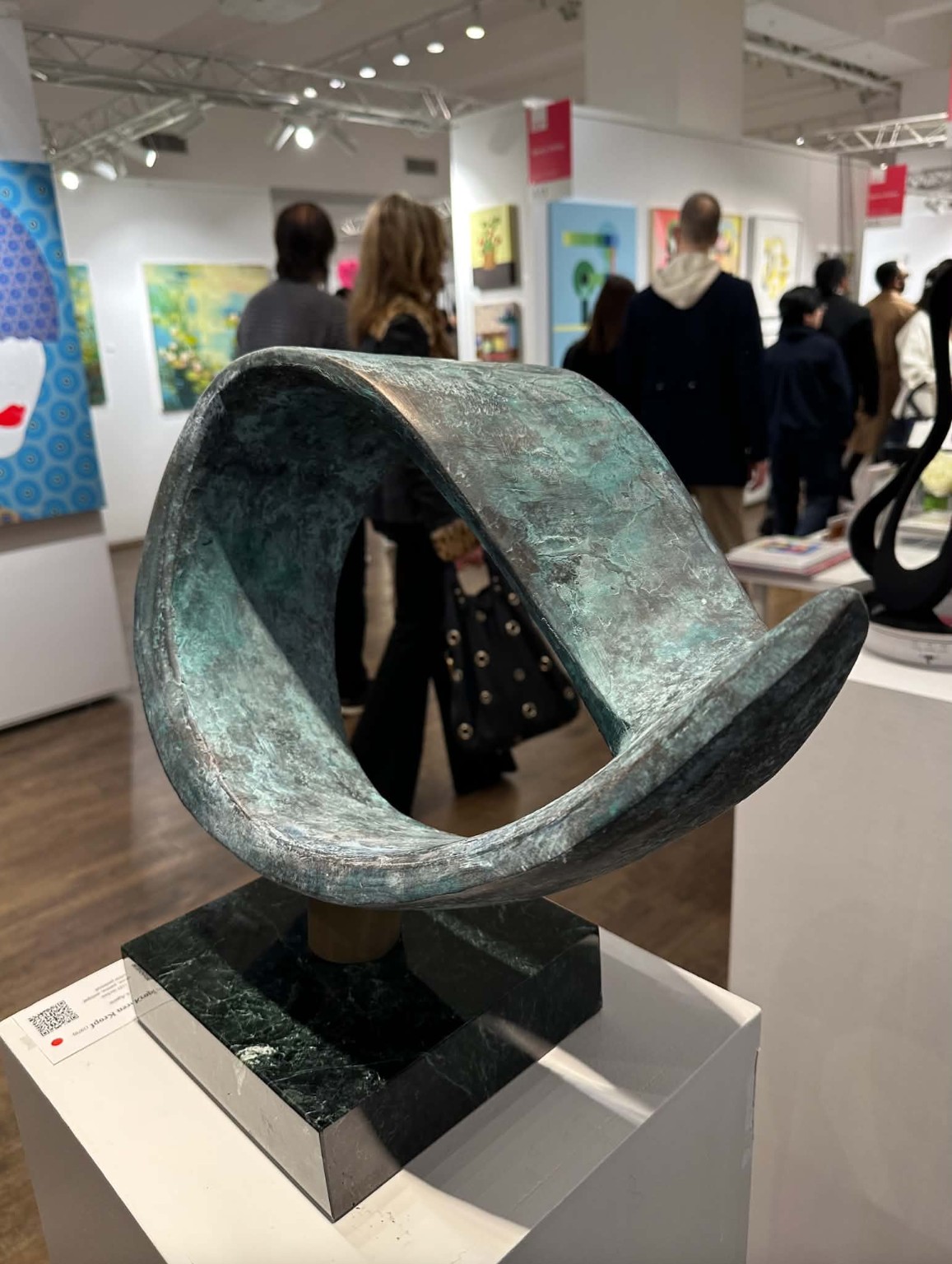
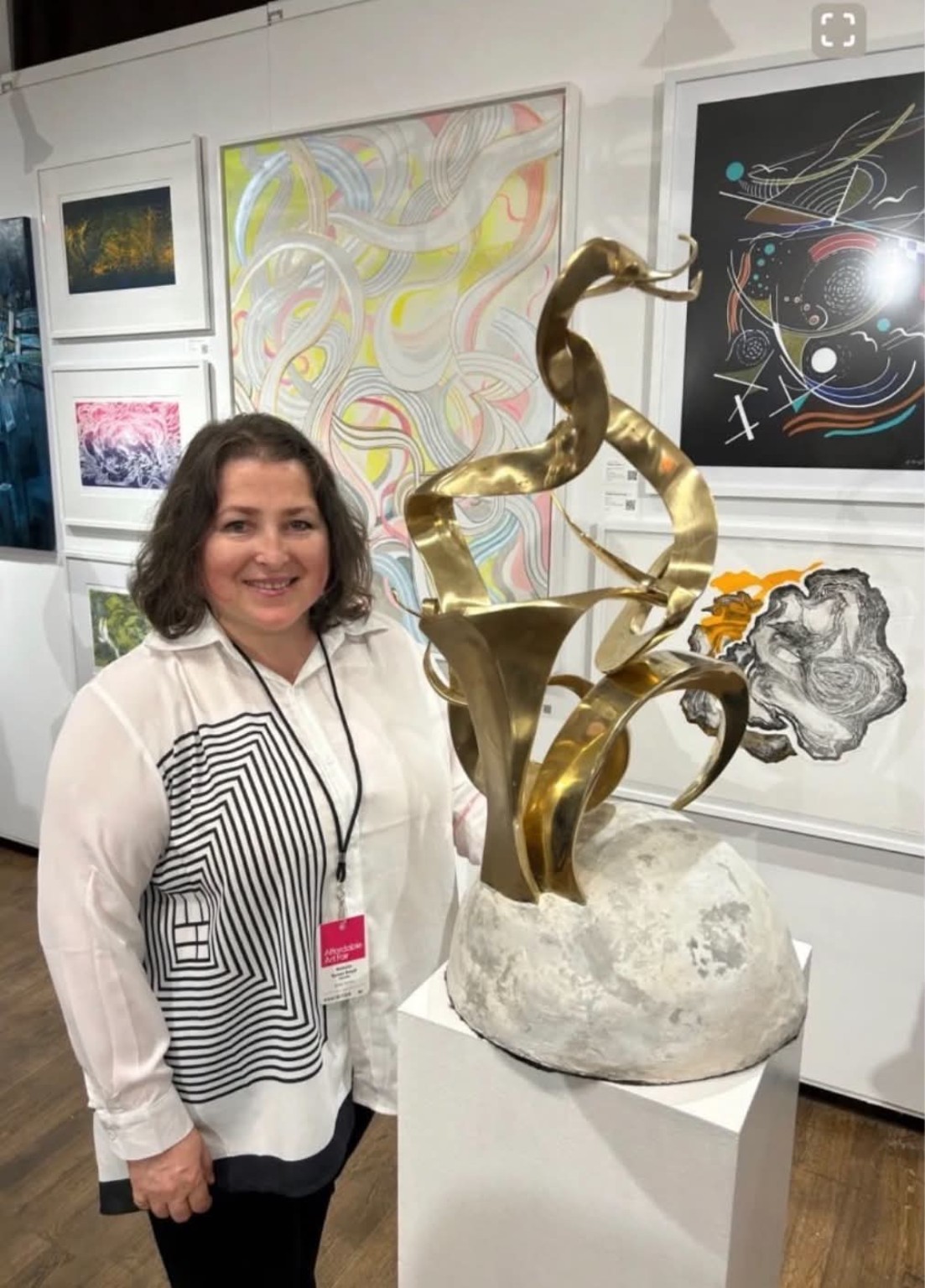
Her bronze works often look like drawings caught in the act of becoming three-dimensional. They are not heavy in the traditional sculptural sense. Even in bronze, they appear mobile, tense, almost airborne. They do not simply occupy space. They activate it.
Sculpture as Architecture
Your sculptures often seem architectural. Do you feel that connection?
Natalia Koren: Yes, because a sculpture is never only an object. It changes the space around itself. Even a small form can suggest a pavilion, a passage, a sign, a route, in the city.
Can a sculpture become part of the urban environment?
Natalia Koren: Of course, it can. I often think that an artwork can exist in different scales. On paper it may be a drawing. Cast in bronze it becomes sculpture. Enlarged, it could become an urban object, a destination — something people walk around, through, or toward.
Where is the boundary between artist and architect?
Natalia Koren: Perhaps, the boundary appears only at the level of function. But before function there is vision: rhythm, proportion, balance, tension, movement. In that sense, artists and architects work with related energies.
What is more important to you: form or the movement of form?
Natalia Koren: Movement and vector. A fixed form is alive only when you feel that it continues beyond itself. The line must keep moving, even when the material has stopped.
Instead of an Epilogue
Saint Petersburg taught her how to see. New York taught her how to move faster, look higher, and not be too surprised when a new opportunity, a late subway ride, a gallery opening and the metaphysics of space all occur on the same day.
The Russian avant-garde gave her permission to question the obvious. Art practice taught her that space is never empty — even when it appears empty, it is occupied by memory, rhythm, tension, unfinished movement and sacred geometry.
Perhaps that is why Natalia Koren’s line never behaves politely. It refuses to stay inside the frame. Sometimes it becomes a sculpture. Sometimes a route. Sometimes a city. And occasionally, if left unsupervised, it starts behaving like architecture.